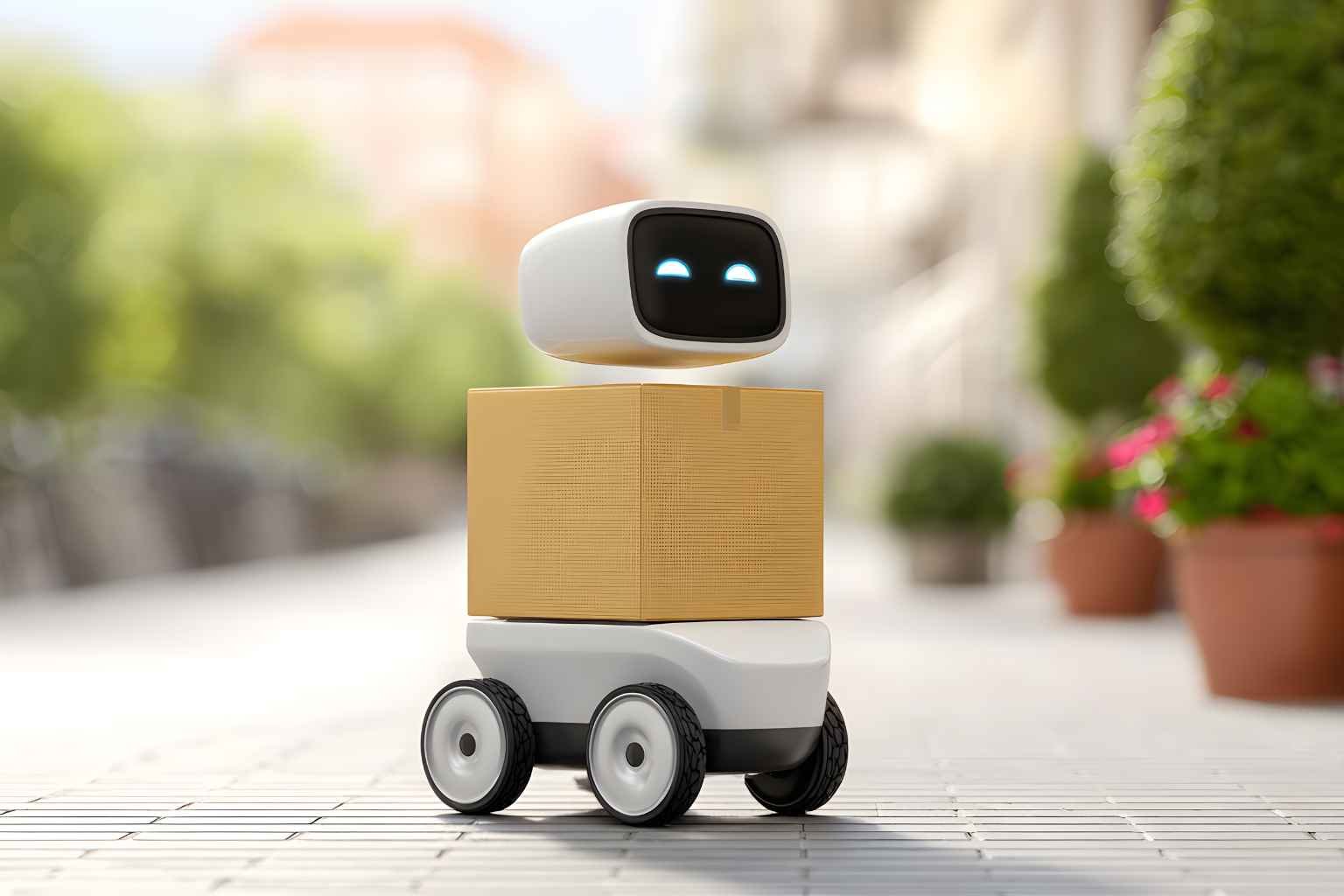

Autonomous delivery robots are becoming a familiar sight on city sidewalks as technology companies spend millions to bring them from the lab to your local corner store or food takeout spot. These compact self-driving robots roll on sidewalks, roads and building complexes delivering groceries, medications, parcels and other items. Thanks to the proliferation of sensors, AI navigation tools and advances in smart city planning, delivery robots are starting to pull some traffic clogs off roads while shortening time spent on delivery runs to create a testament to convenience. They will come into play as a significant component of our future urban delivery system in 2025.
1. What They Are: Autonomous Delivery Robots
Self driving delivery robots are machines equipped with cameras, sensors, GPS and artificial intelligence to navigate roads and sidewalks. They’re able to sense obstacles, steer clear of pedestrians, obey traffic signals and drive from point A to point B without any human help. Such robots are designed to transport small packages easily and securely.
2. How Delivery Robots Became a Factor in New York City
Urban cities are experiencing increasing delivery traffic from online shopping, quick commerce and food delivery services. The old ways of delivering the internet can be slow and costly. There are also self-contained robots that can clear snow faster, cleaner and cheaper. They are envisioned by companies and governments as a key element of future mobility systems.
3. Reducing Traffic and Delivery Time
Delivery robots can help lighten the load by shifting small orders off the road. Rather than bikes or vans, these robots use the sidewalk or special lanes to expedite deliveries. They work at rush hour, into the night and early in the morning without clogging up traffic.
4. Safe and Efficient Navigation Systems
High resolution cameras, Lidar, radar and mapping technology are used by robot to safely navigate through crowded city streets. It can identify pedestrians, potholes, animals and obstacles on the spot. That way you won’t have trouble steering around packed markets or tight streets.
5. Why Robots Will Soon Be Delivering Your Pizza
This excerpt uses bullets in accordance with your rule:
- Growing demand for online shopping and fast delivery
- Inexpensive replacement for human delivery person
- Low percentage of use, compared to vehicles
- Reduced traffic and pollution
- Should be available to work 24×7 continuously without any break.
These points illustrate why cities are rapidly embracing autonomous robots.
6. Services Supported by Autonomous Robots
This section uses a consecutive numbered points (with different heading):
- Grocery delivery for local stores
- Medication and health product delivery
- Food and restaurant order delivery
- Parcel and courier services
- Campus and building delivery systems
Services like these are what’s going to make robots useful in everyday life.
7. Benefits for Businesses and Customers
Businesses enjoy lower delivery costs, quicker service, and high reliability. Live Liturgies of Orders are with customer to deliver in time at minimal delivery charges. Delivery robots can provide a convenient way for elderly or single people to get access to essential supplies without leaving home.
8. Challenges in Using Delivery Robots
Despite myriad upsides, there are a few roadblocks delivery robots would further have to overcome:
- Difficulty navigating extreme weather
- Limited load carrying capacity
- Technical breakdowns or battery issues
- Need for supportive city infrastructure
- Concerns about theft or vandalism
These problems will be solved with improved technology and better regulation.
9. Global Cities That Are Leading the Robot Delivery Revolution
Cities such as San Francisco, Tokyo, London, Dubai and Singapore already have delivery robots performing daily operations. Universities, tech parks and sprawling residential complexes also use them for controlled, safe deliveries. Robot delivery in urban and semi-urban Many developing countries have signed up for pilot projects to test out robot delivery system.
10. The Future of Autonomous Deliveries in Cities
Delivery robots will become more intelligent, quick and secure in the next few years. They will operate with drones, electric bike and self-driving vehicles to build out a full package delivery service. Cities; will construct dedicated robot lanes, smart crossings and charging zones. Delivery robots will become ubiquitous as technology becomes less expensive and more accessible in homes, offices and public spaces.
Key Takeaways
- Delivery robots offer fast, eco friendly, and cost efficient delivery solutions
- They slash traffic and they make everyone safer
- Great for groceries, food, packages and medicines
- There are challenges but technology is rapidly getting better
- The future of smart cities will be largely automated by machines.
FAQs:
Q1. In layman terms, what is an autonomous delivery robot?
They are tiny robots that navigate streets on their own to deliver goods, no human driver required.
Q2. Delivery robots typically deliver what?
Food, groceries, medicine, packages and takeout.
Q3. Delivery robots, safety in cities?
Yes, they rely on sensors and cameras to steer clear of obstacles and navigate safely.
Q4. Will the delivery robots be able to work in any kind of weather?
Many can, but heavy rain or snow can be a problem.
Q5. Are robots going to take over for human delivery workers?
Not completely. Robots will be doing the small deliveries while people, I mean men, do complex tasks.