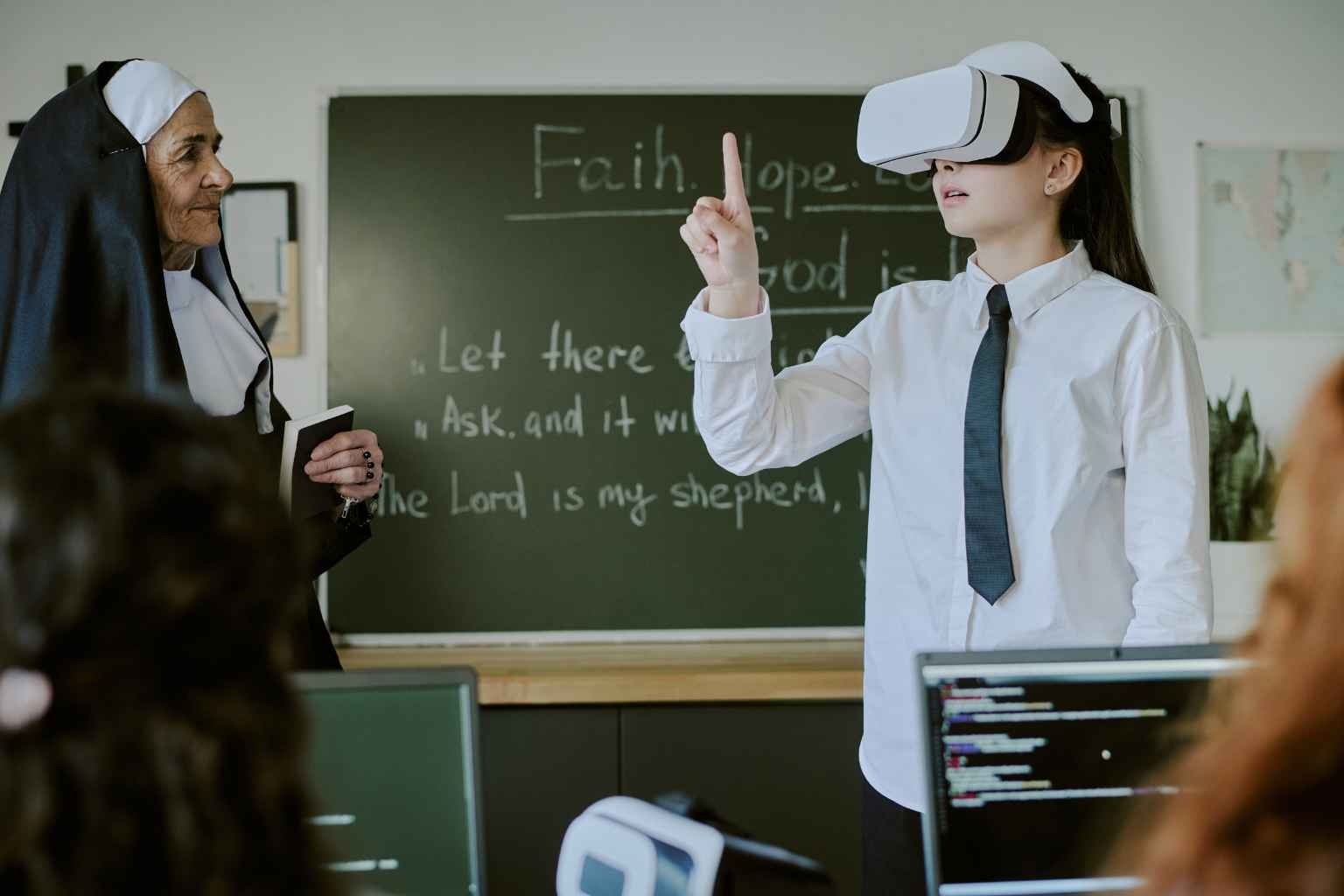

Modem on the Virtual Reality classrooms are revolutionizing education by enabling students to experience lessons, instead of reading or listening to them. It’s 2025 and Virtual Reality has transformed the way we learn – making it more interactive, immersive and fun. Students can travel to the past and visit a historical site; they can perform an experiment in a science class, nothing messes up; they learn complicated ideas through life like simulations. This new learning methodology enhances focus, comprehension and enjoyment of learning.
1. What Virtual Reality Classrooms Really Mean
A VR classroom involves headsets and virtual worlds to make a 3D learning environment. Students walk around in virtual worlds, touch and manipulate objects, and learn through the experience of doing.
2. Learning Becomes More Engaging
VR classrooms make lessons exciting. Students no longer sit back and watch videos; they feel like they are inside the lesson. This generates interest and having signed BCS they can also remember things well.
3. Real Life Simulations Improve Understanding
For example, students do science experiments, examine planets, or look inside a museum or even in 3D human anatomy to learn how things work and not be so confused.
4. No More Dread of Challenging Issues
Physics, biology and history are easier this way with VR. Students can see processes, play with models and learn incrementally. This decreases fear and increases confidence.
5. Why Are VR Classrooms Trending
Here are the key reasons they’ve been able to grow so quickly:
- More engaging lessons
- Practical learning through simulations
- Better concentration
- Realistic experiences
- Suitable for different learning styles
These are the things that make students to stay hungry for more.
6. Better Collaboration and Group Learning
Virtual classrooms enable students to connect with peers within virtual environments. They can collaborate on group projects, complete jigsaw puzzles and take part in team activities just as if they were in the same room.
7. Technologies Behind VR Learning
These VR classrooms contain sophisticated tools such as 3D graphics, movement tracking, artificial intelligence (AI) led attendant among others. These utilities come together to make realistic, easy-to-traverse worlds.
8. Obstacles to Students’ Learning with VR
VR learning poses some challenges, despite the exciting potentials. Here are the main issues:
- High cost of VR headsets
- Need for strong internet connection
- Eyestrain and tiredness after long use
- Learning curve for some students to acclimate to online environments
Effectively addressing these challenges leads to calmer and more secure learning environments.
9. How VR Benefits Schools and Teachers
Interactive 3D models make it easier for teachers to teach subjects. Schools can provide virtual labs, digital field trips and hands-on exercises without the cost of purchasing physical equipment. VR will save teachers time and make teaching better.
10. What is the Future of VR Classrooms
Next-gen VR classrooms will be significantly more advanced as they will endow full body motion tracking, voice-driven interactions and AI assisted learning guides. There students will be able to dig deeper, pick up the pace of learning and engage the sort of one-on-one virtual instruction that is tailored to their needs.
Key Takeaways
- VR class rooms make learning more interesting and interactive
- Complex subjects are made simple using real world 3D scenarios
- With an environment that’s anything but real, it suddenly becomes easier to collaborate and learn as a group.
- VR accomodates divergent learning paces and strategies
- VR For Education Will Move Beyond Classrooms In The Future
FAQs:
Q1. How would you explain a VR classroom in simple words?
It’s a digital learning environment in which we use VR headsets to create lessons that students can explore in 3D.
Q2. Is VR learning as effective as traditional learning?
There’s more engagement and better comprehension, but these two methods are best used in concert.
Q3. Can VR change the game for science topics?
Yes, students can do virtual experiments and navigate models anywhere from a playground.
Q4. Is VR expensive for schools?
It’s not cheap, but there are now plenty of inexpensive VR tools on the market.
Q5. Do students enjoy VR learning?
Yes, most students are thrilled to be using VR and feel more engaged with their lessons