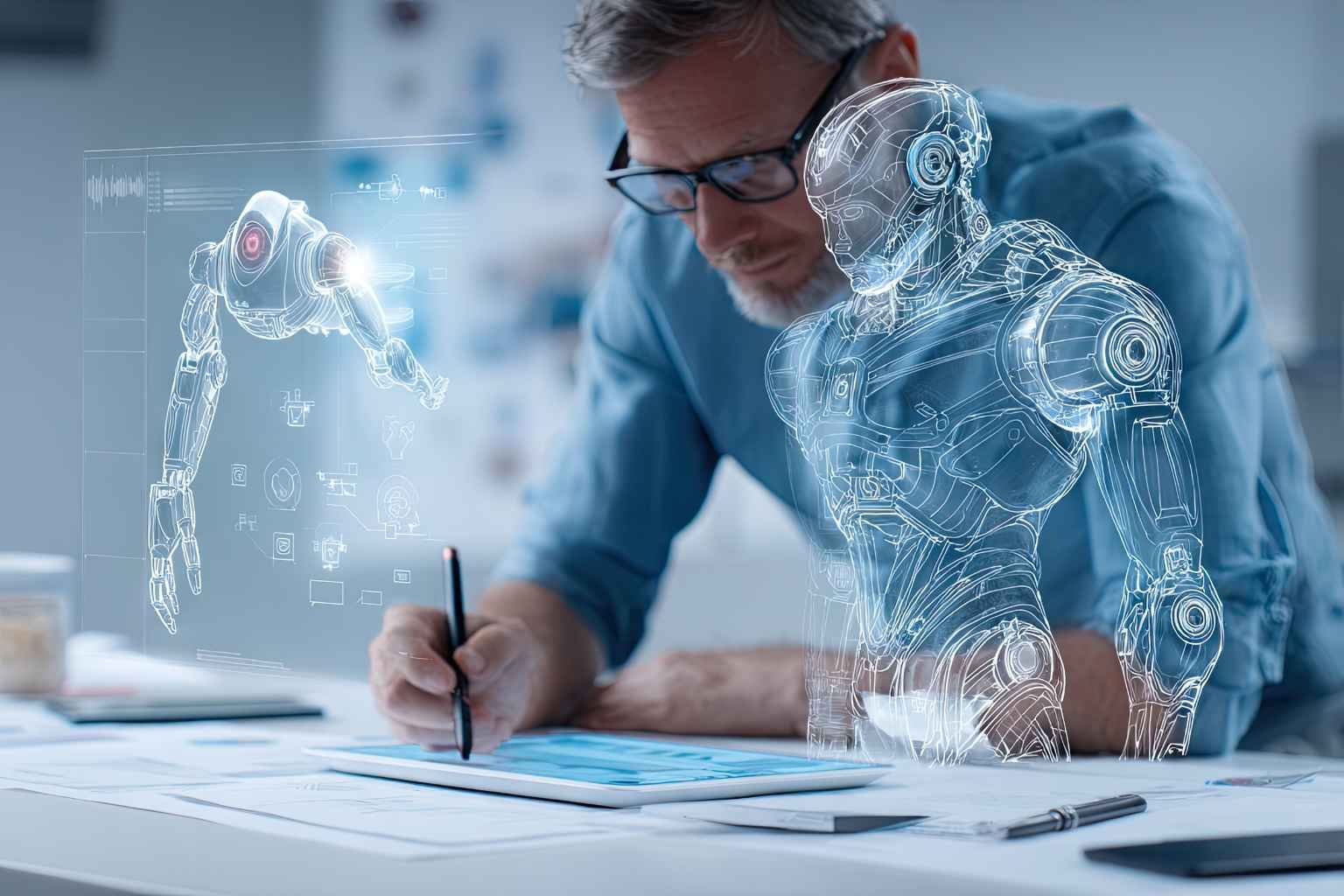

Workplaces have transformed around the globe in 2025 driven by artificial intelligence Image Relation. Today, AI systems take care of the mundane, drive automation, facilitate in decision making, and enable employees to work more quickly and intelligently. Businesses are increasingly using AI for communication, customer service, and data analysis as well as creative work a trend that could help transform the city’s work culture writ large. Workers are being freed from repetitive work for more strategic, creative and collaborative tasks. The future workplace will be more flexible, more digital and more human skill focused.
1. How AI Is Changing Traditional Job Roles
AI systems already do data entry, scheduling, reporting and analytics. This is less burdensome and gives workers something meaningful to do. Rather than humans to be replaced altogether by AI, it’s an assistance system enhancing productivity. This trend is forcing organizations to re-architect jobs and get employees ready for higher-level roles.
2. Trends Toward Hybrid and Flexible Work Models
AI enabled productivity tools are revolutionizing remote and hybrid work. A world of virtual assistants, automation software and cloud platforms for collaboration from anywhere. Now, employees are more able to accomplish tasks, hold meetings and communicate remotely. They then enjoy better work balance and become more satisfied with their job.
3. Speeding Up Decisions With AI Analysis
This AI processes enormous data sets in seconds and can offer insights that help companies make smarter decisions. It recognizes trends, anticipates movements then proposes modes of action. This helps leaders in formulating strategies, tracking performance and adapting to change rapidly.
4. Move to Skill Based Work Culture
As AI chips away at routine tasks, creativity, emotional intelligence, complex problem solving and great leadership become the skills employers value most. Staff are also encouraged to upskill via online training, workshops and AI-backed learning environments. This fosters a learning organization.
5. Why You Need to Know About AI Driven Work Culture
- AI automates repetitive tasks
- Remote tools support flexible working
- Companies want faster decision making
- Employees need future ready skills
- Digital transformation is everywhere
These are some of the reasons for which workplaces are adopting AI quickly.
6. New Work Styles in the Age of AI
- AI based hiring and recruitment
- Smart virtual meeting assistants
- Automated project management
- Personalized employee learning paths
- AI powered customer communication
These trends illustrate how AI works its way into the nitty gritty of one’s day.
7. Better Employee Wellness and Work Life Balance
The reality AI tools remove the pressure of workload by automating time waster duties. Intelligent scheduling, wellness applications and productivity tracking AI-based ensure employees are at work healthy (and they’re not experiencing burnout). Many companies also deploy AI to monitor signs of stress and recommend breaks or support programs.
8. Issues in AI-Powered Workforce
Despite the benefits, however, AI enabled work culture is not without its challenges:
- Job insecurity among staff
- Need for constant upskilling
- Data privacy and security risks
- Overdependence on digital systems
- Difficulty adapting to new technology
These challenges will not be tackled unless companies give employees the training, combined with a dose of transparency, they need.
9. The Future is Human Co-sourced AI
The Future of Work Is Not “Us Vs. Them.” It’s All of Us. The workplace of the future will be humans and machines working together as teammates, but you can’t have teamwork if half the team is missing. AI will operate the calculations, predicting and automating, while humans are going to engage in creativity, innovation relationships and decision making. This partnership will streamline complaints analysis and enhance business performance across the board.
10. The Future of Work Culture in an AI Led Era
Work spaces will be filled with smart tools and digital assistants (Gartner) and collaboration systems powered by AI. Offices will be more flexible; roles will be more skill based; and teams will work across global locations. Innovated, agile and considering the welfare of people will be what companies focus on. AI won’t supplant the human touch; it will make it stronger by augmenting workers in every enterprise. The future of work is going to be more networked, smarter and more human.
Key Takeaways
- AI frees up the human from repetitive activities and enhancing the decision-power smarter.
- Hybrid work models reinforced with digital, AI tools.hyb…
- Skills like creativity or thinking critically and solving problems become very important.”
- Workplaces will need to deal with challenges such as upskilling and privacy.
- Next: closer cooperation between people and AI
FAQs:
Q1. Will there be no human jobs left when AI achieves everything?
No, AI will only take over menial or already quotidian tasks and humans will do the creative and strategic work.
Q2. In what ways is AI changing the working culture?
It lightens the load, speeds decision-making and enables flexible working.
Q3. What skills do workers need in an AI world?
Yes, things like communication, creativity and problem solving are important.
Q4. Does AI help remote workers?
Absolutely. Artificial intelligence (AI) tools enhance virtual meetings, task management and productivity measurement.
Q5. What will the office of the future be like?
More digital, more flexible and focused around human AI collaboration.”