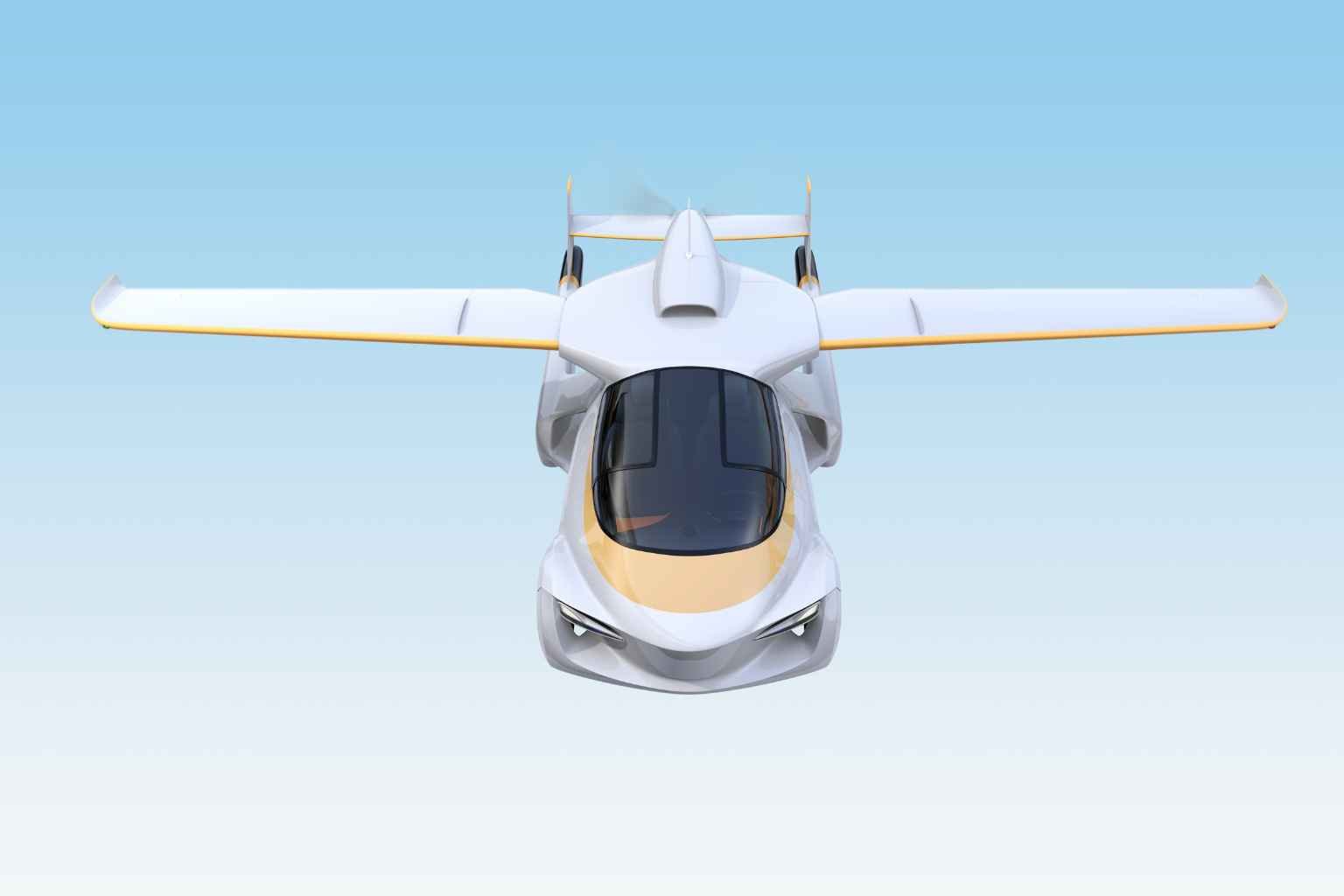

Urban mobility is getting increasingly challenged with traffic and jam, longer commuting time, and limited road spaces. Urban Air Mobility, typically associated with flying cars and air taxis, presents a new way of moving people above jam-packed roads. With advances coming fast in electric aircraft, automation and smart infrastructure, flying machines are no longer just science fiction. Gradually they are starting to look like a plausible solution for future cities.
1. What Is Urban Air Mobility
UAM stands for Urban Air Mobility, the world of personal aircraft transport “to virtually anywhere” within urban areas. The aircraft are capable of vertical takeoff and landing, so they can operate in crowded cities. UAM will serve short distance routes to connect city centers, airpots and the vicinity rapidly.
2. Why Cities Will Be Ready for Urban Air Mobility
From San Francisco to Shanghai, cities are waging their own battles against traffic and pollution. Making roads wider is expensive and often not possible in already crowded places. Urban Air Mobility introduces a new level of transport in the sky, lessening traffic congestion on roads and enabling commuters to fly above any gridlocks.
3. How Flying Cars and Air Taxis Will Work
Electric vertical takeoff and landing technology is deployed in the majority of UAM systems. They use multiple rotors or fans, rather than runways. They are quieter and cleaner than helicopters, powered by electric motors. Sophisticated software is used to control flight and ensure safe route management.
4. Electric and self-driving technologies: the key aspects
Electric propulsion is also crucial to enabling the practicality of flying cars. It lessens noise, soot and operating expenses. Automation and artificial intelligence help with navigation, obstacle avoidance and traffic coordination. Energy Higher levels of autonomy will lead to a decrease in pilot-in-the-loop.
5. Benefits of Urban Air Mobility
Urban Air Mobility has several possible benefits:
- Faster travel across busy cities
- Reduced road congestion
- Decreased emissions vs traditional aircraft
- Relatively quiet to operate for urban setting
- Transport of EMS (Emergency and Medical Services) by new means
All these contributions have made UAM a promising asset for the future city and oriented planning.
6. Infrastructure Needed for Flying Vehicles
Urban Air Mobility needs new infrastructure in the form of vertiports. These are small takeoff and landing hubs constructed either on the roof of a building, on top of parking structures, or even out in the open. Cities also require charging infrastructure, maintenance facilities and air traffic management systems for low altitude flights.
7. Safety and Regulation Challenges
There is no bigger problem for flying cars than safety. “Authorities need reliable mechanisms, good lines of communication and clear rules.” Regulations for how to handle airspace, crew licensing and passenger safety are continuing to be developed. The foundation of public trust will be strict safety standards and open testing.
8. Cost and Accessibility Factors
Flying car services in the early days are likely to be costly and serve only premium users. But as technology evolves and production ramps up, costs should come down. Consolidated, shared air taxi services could reduce the cost of urban air mobility to something more accessible for routine travel.
9. Environmental Impact on Cities
Urban Air Mobility is meant to provide cleaner transportation overall. Electric aircraft do not create direct emissions and are far quieter than helicopters. If propelled by electricity generated from renewable sources, the UAM modes offer considerable benefits for short-range trips in urban areas.
10. Get Ready for the Rise of Flying Cars
Of course, flying cars won’t supplant the standard commute overnight. Adoption will come incrementally via pilots, restricted routes and controlled conditions. UAM will develop gradually over the next decade as technology, regulation and infrastructure converge.
Conclusion
Urban Air Mobility is bringing flying cars closer to reality than ever before. With cleaner technology, smart systems, and growing city needs, this new form of transport has strong potential. While challenges still exist, progress is happening fast. In the coming years, looking up and seeing flying taxis may become as normal as seeing cars on the road today.
FAQs:
Q1. The very essence of UA M in the simplest way possible?
It is a transportation network involving small electric aircraft that can move people within cities.
Q2. Flying cars: Are they safe for city travel?
They are being built with robust safety systems and rigorous regulation to protect the public.
Q3. Will flying cars overtake regular old ground cars?
No, they’re not going to make existing transport go away.
Q4. How loud are the air taxis of the future?
Electric motors make them far quieter than helicopters.
Q5. When will flying cars be in cities?
Small services could be launched in the next few years, and widespread use is possible within a decade.